
-
- BoldMast EnanMast PropNandro DecaNandro PPPrimobolanSustanonTest CypTest EnanTest propTren AceateTren BlendTren ETren Hex
- AnadrolAnavarArimidexClenbuterolClomidDianabolProvironStanozololT3Tadalifil
Perhaps local weight loss is really feasible?
Views: 2 Author: Site Editor Publish Time: 2024-05-07 Origin: Site

Local weight loss, or selective weight loss, refers to the reduction of subcutaneous fat in the area caused by exercise of local muscles. This is a conceptual description of local weight loss, but whether it exists in the real world has always been controversial. In fact, the discussion about the existence of local fat reduction has been ongoing for half a century, but most people agree with the view that whether it is local muscle contraction or more muscle groups participating in physical exercise, it will lead to the overall utilization of fat tissue throughout the body, rather than just reducing the fat around the muscles participating in exercise.
Several well-known studies on local weight loss in history have focused on strength training rather than aerobic endurance training. However, it is well known that aerobic endurance training can often produce good results in weight loss, and although strength training can improve fat mobilization, it can also increase muscle mass/strength by inducing neuromuscular improvement. In addition, strength training relies more on anaerobic fermentation of glucose for energy supply, and it is not clear whether this energy supply characteristic will affect local fat metabolism.
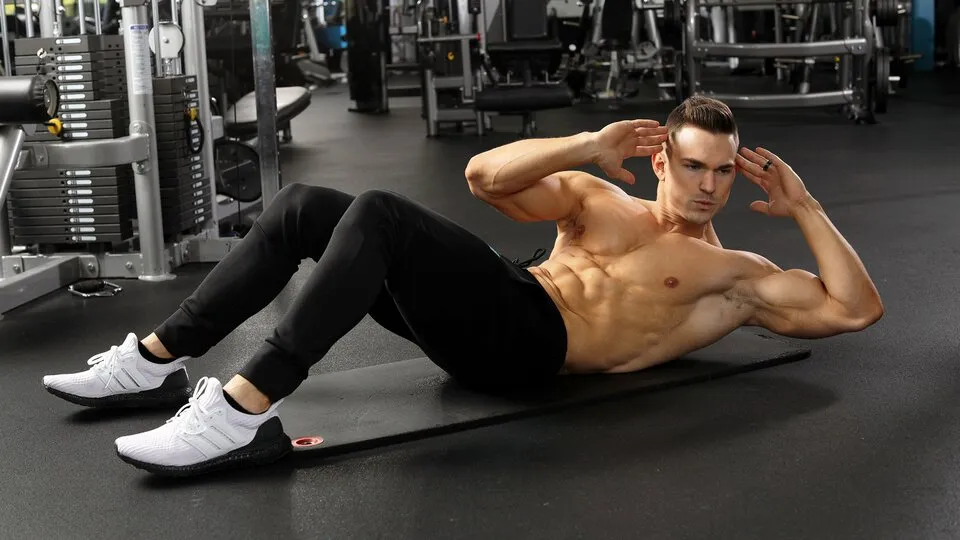
A study published in the Journal of the American Physiological Association in November 2023 used a combination of aerobic training and local endurance training to investigate the issue of local fat loss. The experimental design is as follows:
Sixteen overweight male participants with an average age of 43 were selected and randomly assigned to two groups. One group was the control group and only underwent 45 minutes of treadmill training four times a week; The other group is the experimental group, trained on a treadmill for 27 minutes each time, along with two abdominal exercises: Russian rotation and curling. The training method used by Russia for rotations and supine abdominal rolls consists of four groups, each lasting 4 minutes of interval training. Low intensity active rest will be interspersed between groups of abdominal muscle training. Throughout the treadmill training, participants are not allowed to grip the handrails.
In terms of training intensity, the treadmill uses a maximum heart rate of 70%; The intensity of abdominal training (Russian twists, curls) is 30-40% of the maximum intensity.
Researchers matched the training energy consumption of the two groups of participants by fine-tuning the training intensity to ensure that the two groups of trainees consumed equal amounts of calories throughout all training sessions.
The experiment lasted for ten weeks.
After ten weeks, it was found that both groups of participants effectively lost weight and body fat. The participants who received treadmill+abdominal muscle training had a significant decrease in trunk fat, with an average decrease of 3%. However, the participants who only received treadmill training did not observe any changes in abdominal fat. The total fat and lower limb fat of the two groups of participants decreased, but there was no significant difference between the groups. It is worth noting that the subjects who only underwent treadmill training showed a significant decrease in lean weight, with an average decrease of up to 2%, while the treadmill+abdominal muscle training group did not show significant changes in lean weight. The waist circumference and waist to hip ratio of both groups of participants showed a significant decrease. Researchers believe that strengthening abdominal training during weight loss effectively mobilizes fat storage stored around the abdominal muscles, and aerobic training does indeed achieve the effect of reducing local abdominal fat.
There are many factors that affect the distribution of fat storage, such as hormone levels, gender, age, activity levels, etc. Physical exercise can increase subcutaneous fat blood flow and hormone sensitive lipase, which can increase fat mobilization and mitochondrial oxidation. From this perspective, exercising local muscles theoretically helps to reduce the mobilization and utilization of adipose tissue in areas where blood circulation improves.
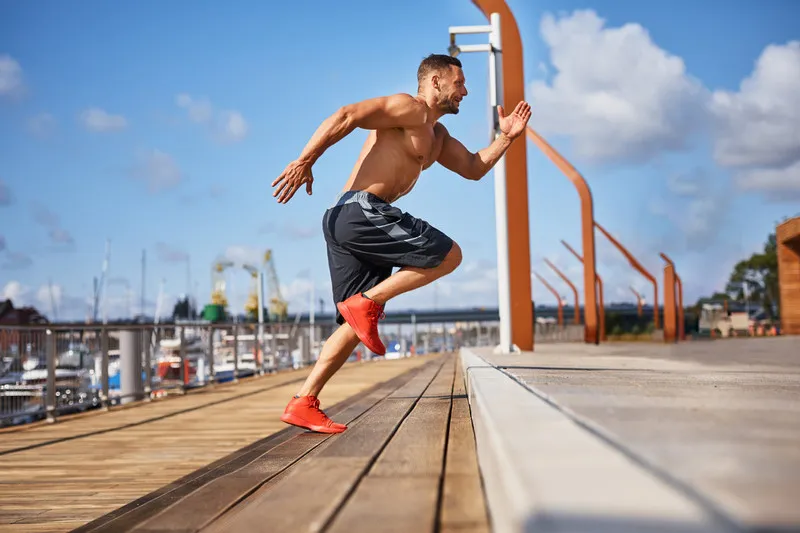
In addition, exercising at relatively low intensity has a higher mobilization level of subcutaneous fat, and as the training intensity increases, the decomposition rate of intramuscular stored triglycerides will gradually increase. Performing abdominal training, due to the relatively small muscle volume involved, may lead to higher mass specific fat oxidation rates, which may be due to increased muscle perfusion levels and enhanced oxygen delivery.
It should be noted that high-intensity 4-group X4 minute interval aerobic endurance training is very suitable for muscle exercise (whole body vs local) and is very effective in improving local muscle tissue oxygen supply. According to research, high-intensity training (>85% maximum heart rate) has a much higher improvement on skeletal muscle capillary vascularization than moderate to low intensity endurance training, which is also a possible mechanism for "local fat reduction".
I think this experiment is of great significance for understanding the principles and mechanisms of fat metabolism, but there are also flaws in the experimental design. For example, the author admitted that there was no control over the diet of the subjects, and there were differences in the baseline levels of the subjects, which may affect the experimental conclusions. Another option is to only select male participants, and the results of similar experimental conditions applied to females are currently unknown. But setting aside the above shortcomings, this experiment does provide strong evidence for "local fat reduction".


